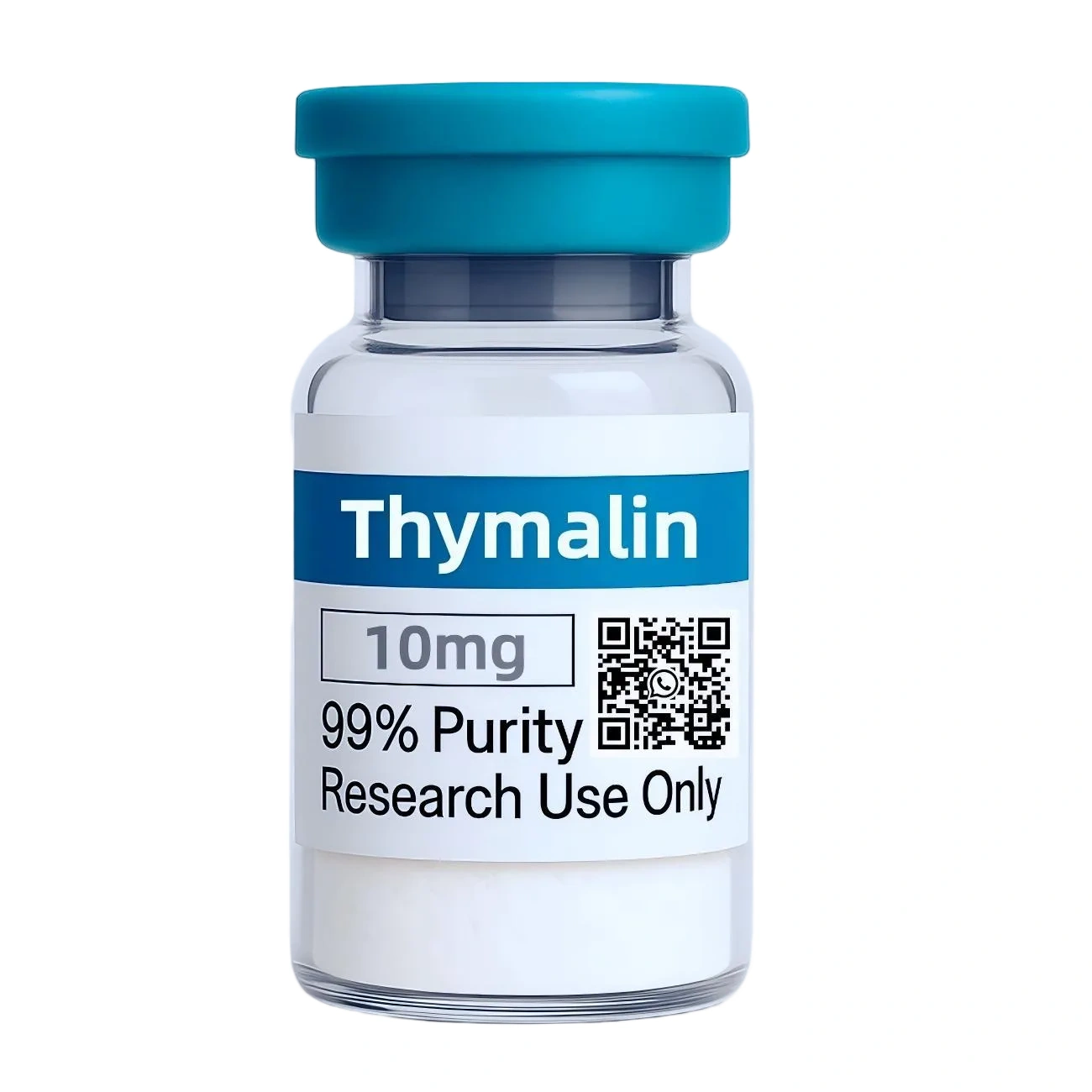
Thymalin thymic peptide for immunological research. Sourced directly from China. Purity tested per batch, wholesale pricing.
Thymalin is a research compound available through our china peptide catalog as a finished, lyophilized vial from an established Chinese manufacturer. It belongs to the Polypeptide bioregulator (thymus-derived peptide fraction)
Research Areas
Immunosenescence, thymic involution, T lymphocyte biology, NK cell function, aging immunology
Available Variants
| Name | Strength | Pack Size | Purity | Availability |
|---|---|---|---|---|
| Thymalin | 10 mg | 10 vials | — | Out of Stock |
| Thymalin | 10 mg | 10 vials | ≥98% | In Stock |
Specification Highlights
Quality & Testing
Testing method: HPLC / LC-MS . Products are supplied against the specification shown on the applicable product page. The standard catalog purity specification is ≥98% unless otherwise stated. Product-specific specifications and quality-control information may vary by compound and batch. Every batch is tested by the manufacturer for purity and concentration as part of routine quality control, using methods such as HPLC and LC-MS. These results are kept in the manufacturer’s internal quality-control records and are not issued as a separate certificate or document.
Variant Notes
Polypeptide fraction isolated from thymus extract. Studied in immunology research for its effects on T-lymphocyte differentiation and thymus gland biology.
Research Areas
Thymic Involution and Immunosenescence Research Thymic involution — the age-related replacement of thymic cortex with adipose tissue — is a primary driver of immunosenescence (age-related immune decline). Research has used thymalin to examine whether thymic peptide supplementation can partially reverse morphological changes in aged thymus, quantified by histological assessment of cortex/medulla ratios, thymic epithelial cell density, and Hassall’s corpuscle distribution. T Lymphocyte Biology in Aging Models Studies in aged rodents have assessed thymalin’s effects on peripheral T lymphocyte populations — specifically the ratio of naive (CD44lo CD62Lhi) to memory (CD44hi) T cells, which shifts with aging as thymic output declines. Research has measured whether thymalin increases peripheral naive T cell frequency, improves CD4⁺/CD8⁺ ratios, and enhances T cell proliferative responses to mitogenic or antigenic stimulation. Innate Immunity and NK Cell Research Beyond T lymphocytes, thymalin has been studied for effects on NK (natural killer) cell cytotoxic activity and macrophage functional capacity in aged animal models. These innate immune endpoints complement adaptive immunity assessments, providing a broader picture of whether thymus-derived peptide supplementation affects both thymic-dependent and thymic-independent immune compartments in aging research. ## Sourcing Thymalin From China
Thymalin is available through our platform as a china peptide sourced directly from an established Chinese manufacturer. Three points define how we handle it:
- Factory-direct, not trader-sourced. We confirm availability and specification with the manufacturer before the order is confirmed. There is no intermediary resale of unknown-origin vials in this catalog.
- Specification before shipment. The purity and concentration specification shown on this page is the manufacturer’s batch specification. Product-specific quality-control information travels with the order.
- Research-use discipline. Like every listing in our catalog, Thymalin is supplied for laboratory research use only, under strict research-use terms.
For buyers comparing chinese peptides suppliers, the practical test is whether the seller can name the manufacturer and show the batch documentation. We work the other way around: the manufacturer and the documentation are the offer. Browse the full catalog or see how sourcing works.
Available Variants
| Name | Strength | Pack Size | Purity | Availability |
|---|---|---|---|---|
| Thymalin | 10 mg | 10 vials | — | Out of Stock |
| Thymalin | 10 mg | 10 vials | ≥98% | In Stock |
Specification Highlights
Quality & Testing
Testing method: HPLC / LC-MS . Products are supplied against the specification shown on the applicable product page. The standard catalog purity specification is ≥98% unless otherwise stated. Product-specific specifications and quality-control information may vary by compound and batch. Every batch is tested by the manufacturer for purity and concentration as part of routine quality control, using methods such as HPLC and LC-MS. These results are kept in the manufacturer’s internal quality-control records and are not issued as a separate certificate or document.
Variant Notes
Polypeptide fraction isolated from thymus extract. Studied in immunology research for its effects on T-lymphocyte differentiation and thymus gland biology.
Research Areas
Thymic Involution and Immunosenescence Research Thymic involution — the age-related replacement of thymic cortex with adipose tissue — is a primary driver of immunosenescence (age-related immune decline). Research has used thymalin to examine whether thymic peptide supplementation can partially reverse morphological changes in aged thymus, quantified by histological assessment of cortex/medulla ratios, thymic epithelial cell density, and Hassall’s corpuscle distribution. T Lymphocyte Biology in Aging Models Studies in aged rodents have assessed thymalin’s effects on peripheral T lymphocyte populations — specifically the ratio of naive (CD44lo CD62Lhi) to memory (CD44hi) T cells, which shifts with aging as thymic output declines. Research has measured whether thymalin increases peripheral naive T cell frequency, improves CD4⁺/CD8⁺ ratios, and enhances T cell proliferative responses to mitogenic or antigenic stimulation. Innate Immunity and NK Cell Research Beyond T lymphocytes, thymalin has been studied for effects on NK (natural killer) cell cytotoxic activity and macrophage functional capacity in aged animal models. These innate immune endpoints complement adaptive immunity assessments, providing a broader picture of whether thymus-derived peptide supplementation affects both thymic-dependent and thymic-independent immune compartments in aging research.
Compound Profile
Thymalin is a polypeptide bioregulator derived from the thymus gland, representing a thymus extract standardized for its immunomodulatory peptide content. As part of the peptide bioregulator research program developed in Russian immunogerontology, thymalin is positioned as a thymus-derived preparation that exerts trophic and regulatory effects on thymic function and T lymphocyte differentiation — processes that decline significantly with age-related thymic involution. The active components include short peptides in the range of 1-6 kDa that have been studied for interactions with T lymphocyte precursors and thymic epithelial cells. Research in aged animal models has examined thymalin’s effects on thymus morphology, T lymphocyte subset composition (CD4⁺/CD8⁺ ratio), NK cell activity, and cytokine production profiles. Studies have assessed whether thymalin administration in aged rodents can partially restore thymic structure, increase circulating naive T cell populations, and improve immune response to antigenic challenge — functional endpoints consistent with thymic rejuvenation research. Mechanistically, the bioregulator approach proposes that short thymic peptides restore gene expression patterns in thymic stromal and precursor cells that decline with age-related epigenetic changes. Peptides of China supplies Thymalin as a lyophilized powder at 99%+ purity specifications for its peptide fraction content, verified by HPLC. Every batch is tested by the manufacturer for purity and concentration as part of routine quality control. All products are for laboratory research use only and are not for human consumption.
Profile
Research Areas
Immunosenescence, thymic involution, T lymphocyte biology, NK cell function, aging immunology
Available Variants
| Name | Strength | Pack Size | Purity | Availability |
|---|---|---|---|---|
| Thymalin | 10 mg | 10 vials | — | Out of Stock |
| Thymalin | 10 mg | 10 vials | ≥98% | In Stock |
Specification Highlights
Quality & Testing
Testing method: HPLC / LC-MS . Products are supplied against the specification shown on the applicable product page. The standard catalog purity specification is ≥98% unless otherwise stated. Product-specific specifications and quality-control information may vary by compound and batch. Every batch is tested by the manufacturer for purity and concentration as part of routine quality control, using methods such as HPLC and LC-MS. These results are kept in the manufacturer’s internal quality-control records and are not issued as a separate certificate or document.
Variant Notes
Polypeptide fraction isolated from thymus extract. Studied in immunology research for its effects on T-lymphocyte differentiation and thymus gland biology.
Research Areas
Thymic Involution and Immunosenescence Research Thymic involution — the age-related replacement of thymic cortex with adipose tissue — is a primary driver of immunosenescence (age-related immune decline). Research has used thymalin to examine whether thymic peptide supplementation can partially reverse morphological changes in aged thymus, quantified by histological assessment of cortex/medulla ratios, thymic epithelial cell density, and Hassall’s corpuscle distribution. T Lymphocyte Biology in Aging Models Studies in aged rodents have assessed thymalin’s effects on peripheral T lymphocyte populations — specifically the ratio of naive (CD44lo CD62Lhi) to memory (CD44hi) T cells, which shifts with aging as thymic output declines. Research has measured whether thymalin increases peripheral naive T cell frequency, improves CD4⁺/CD8⁺ ratios, and enhances T cell proliferative responses to mitogenic or antigenic stimulation. Innate Immunity and NK Cell Research Beyond T lymphocytes, thymalin has been studied for effects on NK (natural killer) cell cytotoxic activity and macrophage functional capacity in aged animal models. These innate immune endpoints complement adaptive immunity assessments, providing a broader picture of whether thymus-derived peptide supplementation affects both thymic-dependent and thymic-independent immune compartments in aging research.