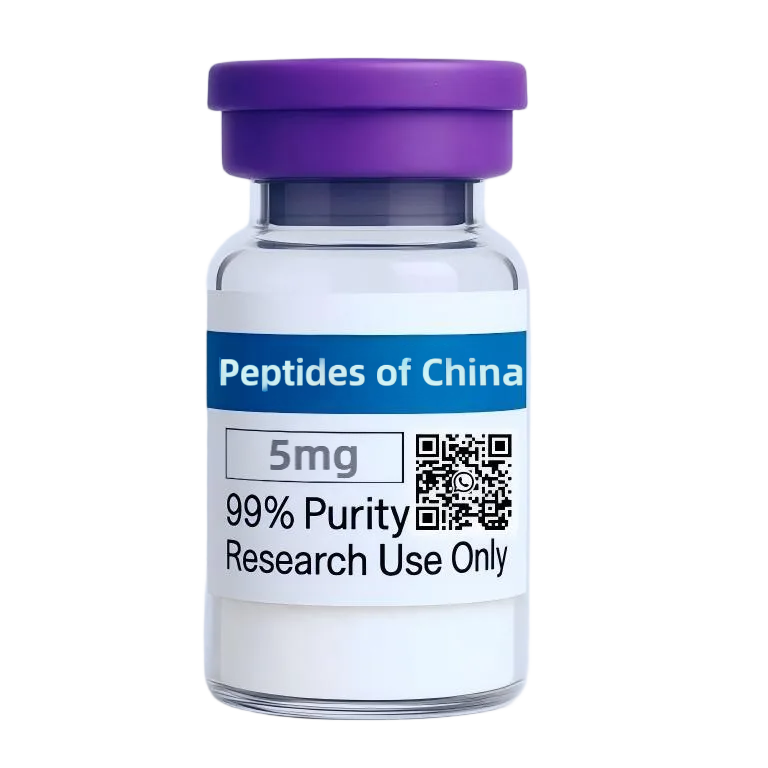
Compounded sleep-support injectable containing GABA 100mg, Melatonin 1mg, L-Arginine 100mg, and L-Glutamine 25mg per ml.
relaxation-pm is a research compound available through our china peptide catalog as a finished, lyophilized vial from an established Chinese manufacturer. It belongs to the Neurotransmitter and neuromodulator injectable combination
Research Areas
GABAergic neuropharmacology, circadian biology, neuronal NO signaling, sleep/wake cycle research, ammonia metabolism
Available Variants
| Name | Strength | Pack Size | Purity | Availability |
|---|---|---|---|---|
| Relaxation PM | 10 ml | 10 vials | >=98% | In Stock |
Specification Highlights
Quality & Testing
Testing method: HPLC / LC-MS . Products are supplied against the specification shown on the applicable product page. The standard catalog purity specification is ≥98% unless otherwise stated. Product-specific specifications and quality-control information may vary by compound and batch. Every batch is tested by the manufacturer for purity and concentration as part of routine quality control, using methods such as HPLC and LC-MS. These results are kept in the manufacturer’s internal quality-control records and are not issued as a separate certificate or document.
Research Areas
GABAergic Pathway Research GABA-A and GABA-B receptor pharmacology is studied in neuronal cell cultures (primary cortical neurons, GABAergic interneuron preparations) and brain slice preparations. GABA-A receptor modulation (chloride conductance, inhibitory postsynaptic potential frequency and amplitude) and GABA-B receptor signaling (Gi/o-coupled K⁺ channel activation, Ca²⁺ channel inhibition) are measured electrophysiologically. The Glutamine-Glutamate-GABA cycle — where Glutamine is converted by glutaminase to Glutamate and then by GAD (glutamic acid decarboxylase) to GABA — is an additional research axis provided by the L-Glutamine component. Circadian Rhythm and Melatonin Signaling Melatonin acts on MT1 receptors to suppress SCN (suprachiasmatic nucleus) firing and on MT2 receptors to phase-shift the circadian clock. Research using melatonin examines receptor binding kinetics (radioligand displacement with 2-[¹²⁵I]-iodomelatonin), circadian phase resetting (Per1/Per2 gene expression in circadian reporter cell lines), and antioxidant activity (ORAC, DPPH assays). Combined with GABA (which also modulates SCN activity via GABA-A receptors), the formulation provides dual inhibitory tone for sleep-related neurophysiology research. ## Sourcing relaxation-pm From China
relaxation-pm is available through our platform as a china peptide sourced directly from an established Chinese manufacturer. Three points define how we handle it:
- Factory-direct, not trader-sourced. We confirm availability and specification with the manufacturer before the order is confirmed. There is no intermediary resale of unknown-origin vials in this catalog.
- Specification before shipment. The purity and concentration specification shown on this page is the manufacturer’s batch specification. Product-specific quality-control information travels with the order.
- Research-use discipline. Like every listing in our catalog, relaxation-pm is supplied for laboratory research use only, under strict research-use terms.
For buyers comparing chinese peptides suppliers, the practical test is whether the seller can name the manufacturer and show the batch documentation. We work the other way around: the manufacturer and the documentation are the offer. Browse the full catalog or see how sourcing works.
Available Variants
| Name | Strength | Pack Size | Purity | Availability |
|---|---|---|---|---|
| Relaxation PM | 10 ml | 10 vials | >=98% | In Stock |
Specification Highlights
Quality & Testing
Testing method: HPLC / LC-MS . Products are supplied against the specification shown on the applicable product page. The standard catalog purity specification is ≥98% unless otherwise stated. Product-specific specifications and quality-control information may vary by compound and batch. Every batch is tested by the manufacturer for purity and concentration as part of routine quality control, using methods such as HPLC and LC-MS. These results are kept in the manufacturer’s internal quality-control records and are not issued as a separate certificate or document.
Research Areas
GABAergic Pathway Research GABA-A and GABA-B receptor pharmacology is studied in neuronal cell cultures (primary cortical neurons, GABAergic interneuron preparations) and brain slice preparations. GABA-A receptor modulation (chloride conductance, inhibitory postsynaptic potential frequency and amplitude) and GABA-B receptor signaling (Gi/o-coupled K⁺ channel activation, Ca²⁺ channel inhibition) are measured electrophysiologically. The Glutamine-Glutamate-GABA cycle — where Glutamine is converted by glutaminase to Glutamate and then by GAD (glutamic acid decarboxylase) to GABA — is an additional research axis provided by the L-Glutamine component. Circadian Rhythm and Melatonin Signaling Melatonin acts on MT1 receptors to suppress SCN (suprachiasmatic nucleus) firing and on MT2 receptors to phase-shift the circadian clock. Research using melatonin examines receptor binding kinetics (radioligand displacement with 2-[¹²⁵I]-iodomelatonin), circadian phase resetting (Per1/Per2 gene expression in circadian reporter cell lines), and antioxidant activity (ORAC, DPPH assays). Combined with GABA (which also modulates SCN activity via GABA-A receptors), the formulation provides dual inhibitory tone for sleep-related neurophysiology research.
Compound Profile
Relaxation PM is a compounded injectable formulation containing GABA 100 mg, Melatonin 1 mg, L-Arginine 100 mg, and L-Glutamine 25 mg per ml. The formulation targets GABAergic pathway modulation, circadian rhythm signaling, and neurotransmitter-associated metabolic mechanisms in preclinical research contexts. Each component has a defined neurological or metabolic research role: GABA (γ-aminobutyric acid) is the primary inhibitory neurotransmitter in the mammalian central nervous system, acting on GABA-A (ionotropic, Cl⁻ channel) and GABA-B (metabotropic, K⁺/Ca²⁺) receptors; Melatonin is the pineal hormone that regulates circadian rhythm via MT1 and MT2 melatonin receptors, with additional antioxidant activity as a hydroxyl radical scavenger; L-Arginine is the substrate for neuronal nitric oxide synthase (nNOS) and is studied in neurological contexts for NO-mediated synaptic signaling; L-Glutamine is the primary brain ammonia buffer and an inter-organ nitrogen carrier, serving as a precursor for both glutamate and GABA synthesis. Peptides of China supplies Relaxation PM as a sterile liquid formulation with component concentrations verified by the manufacturer per batch. For laboratory research use only.
Profile
Components per ml GABA 100 mg, Melatonin 1 mg, L-Arginine 100 mg, L-Glutamine 25 mg
Research Areas
GABAergic neuropharmacology, circadian biology, neuronal NO signaling, sleep/wake cycle research, ammonia metabolism
Available Variants
| Name | Strength | Pack Size | Purity | Availability |
|---|---|---|---|---|
| Relaxation PM | 10 ml | 10 vials | >=98% | In Stock |
Specification Highlights
Quality & Testing
Testing method: HPLC / LC-MS . Products are supplied against the specification shown on the applicable product page. The standard catalog purity specification is ≥98% unless otherwise stated. Product-specific specifications and quality-control information may vary by compound and batch. Every batch is tested by the manufacturer for purity and concentration as part of routine quality control, using methods such as HPLC and LC-MS. These results are kept in the manufacturer’s internal quality-control records and are not issued as a separate certificate or document.
Research Areas
GABAergic Pathway Research GABA-A and GABA-B receptor pharmacology is studied in neuronal cell cultures (primary cortical neurons, GABAergic interneuron preparations) and brain slice preparations. GABA-A receptor modulation (chloride conductance, inhibitory postsynaptic potential frequency and amplitude) and GABA-B receptor signaling (Gi/o-coupled K⁺ channel activation, Ca²⁺ channel inhibition) are measured electrophysiologically. The Glutamine-Glutamate-GABA cycle — where Glutamine is converted by glutaminase to Glutamate and then by GAD (glutamic acid decarboxylase) to GABA — is an additional research axis provided by the L-Glutamine component. Circadian Rhythm and Melatonin Signaling Melatonin acts on MT1 receptors to suppress SCN (suprachiasmatic nucleus) firing and on MT2 receptors to phase-shift the circadian clock. Research using melatonin examines receptor binding kinetics (radioligand displacement with 2-[¹²⁵I]-iodomelatonin), circadian phase resetting (Per1/Per2 gene expression in circadian reporter cell lines), and antioxidant activity (ORAC, DPPH assays). Combined with GABA (which also modulates SCN activity via GABA-A receptors), the formulation provides dual inhibitory tone for sleep-related neurophysiology research.