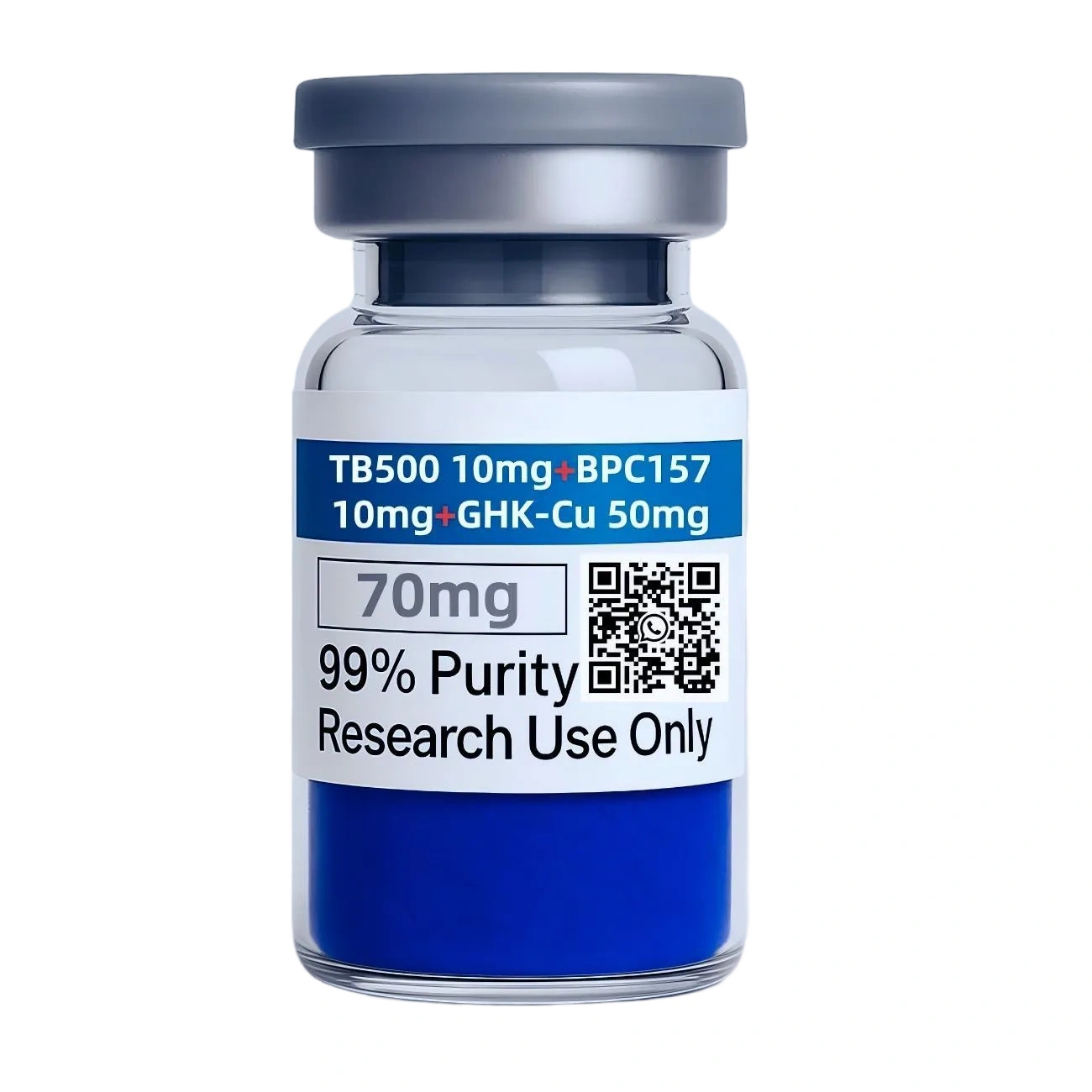
Composition of TB-500, BPC-157, and the copper peptide GHK-Cu. The research context of its components covers cell migration, extracellular matrix regulation, and tissue remodelling processes.
GLOW is listed in our china peptide catalog as a finished research compound from an established Chinese manufacturer. It is catalogued under the Skin & Hair, Tissue Repair, Angiogenesis, ECM Remodelling
Available Variants
| Name | Strength | Pack Size | Purity | Availability |
|---|---|---|---|---|
| GLOW | 50 mg | 10 vials | — | In Stock |
| GLOW | 70 mg | 10 vials | ≥98% | In Stock |
| GLOW | 70 mg | 10 vials | — | In Stock |
Specification Highlights
Variant Notes
Research blend of TB-500 (full 43aa sequence), BPC-157, and GHK-Cu copper peptide. Studied for combined effects on tissue remodeling, extracellular matrix turnover, and cutaneous repair signaling in preclinical models.
Research Areas
Dermal Wound Healing & Fibroblast Research Dermal wound healing research using the GLOW combination addresses the three phases of repair: inflammation, proliferation, and remodelling. TB-500’s anti-inflammatory (NF-κB suppression) and migration-promoting (actin remodelling) activity is characterised in scratch-wound closure assays in human dermal fibroblast (HDF) and keratinocyte (HaCaT) cell lines. BPC-157 is studied for VEGF-driven angiogenesis using human microvascular endothelial tube formation assays. GHK-Cu’s effects on collagen type I, III, and elastin mRNA (by RT-PCR) and protein secretion (by Sircol collagen assay) are measured in 3D fibroblast-populated collagen lattice (FPCL) and dermal equivalent models. Angiogenesis & Microvascular Research Vascularisation of healing tissue is rate-limiting in deep dermal and full-thickness wounds. BPC-157 upregulates VEGFR-2 expression and stimulates NO-mediated vasodilation, characterised using human umbilical vein endothelial (HUVEC) and dermal microvascular endothelial cell tube formation assays (Matrigel basement membrane extract). TB-500’s Ac-SDKP tetrapeptide active sequence also promotes endothelial cell chemotaxis in transwell migration assays. The combination’s angiogenic synergy — whether BPC-157 and TB-500 together produce greater tube formation than either alone — is a quantifiable primary endpoint using total tube length and branch point counting via automated microscopy. Extracellular Matrix Remodelling via GHK-Cu GHK-Cu is a naturally occurring tripeptide-copper complex found in human plasma that increases in concentration at sites of tissue injury. Research demonstrates that GHK-Cu stimulates fibroblast expression of collagen I, collagen III, fibronectin, and elastin while simultaneously regulating MMP-1, MMP-2, and their tissue inhibitors (TIMPs) — a balanced ECM remodelling profile that avoids excessive fibrosis. The copper ion (Cu²⁺) component contributes to antioxidant enzyme (superoxide dismutase, ceruloplasmin) upregulation in fibroblasts. Gene expression studies using Affymetrix microarray have characterised GHK-Cu’s broad genomic effects in human fibroblasts, including upregulation of over 100 genes involved in repair and tissue organisation. Skin Barrier & Keratinocyte Models The skin barrier’s structural integrity depends on keratinocyte proliferation, differentiation, and tight junction protein expression. In organotypic skin equivalent models (reconstructed human epidermis on dermal equivalents), the GLOW combination is studied for effects on epidermal thickness, keratinocyte differentiation markers (involucrin, filaggrin, loricrin), and barrier permeability (TEER measurements and dye permeation assays). GHK-Cu’s established photoprotective effects in UVB-irradiated keratinocyte models (reduced CPD formation, p53 accumulation, and oxidative stress markers) are examined alongside BPC-157 and TB-500’s anti-inflammatory contributions to post-UV repair. ## Sourcing GLOW From China
GLOW is available through our platform as a china peptide sourced directly from an established Chinese manufacturer. Three points define how we handle it:
- Factory-direct, not trader-sourced. We confirm availability and specification with the manufacturer before the order is confirmed. There is no intermediary resale of unknown-origin vials in this catalog.
- Specification before shipment. The purity and concentration specification shown on this page is the manufacturer’s batch specification. Product-specific quality-control information travels with the order.
- Research-use discipline. Like every listing in our catalog, GLOW is supplied for laboratory research use only, under strict research-use terms.
For buyers comparing chinese peptides suppliers, the practical test is whether the seller can name the manufacturer and show the batch documentation. We work the other way around: the manufacturer and the documentation are the offer. Browse the full catalog or see how sourcing works.
Available Variants
| Name | Strength | Pack Size | Purity | Availability |
|---|---|---|---|---|
| GLOW | 50 mg | 10 vials | — | In Stock |
| GLOW | 70 mg | 10 vials | ≥98% | In Stock |
| GLOW | 70 mg | 10 vials | — | In Stock |
Specification Highlights
Variant Notes
Research blend of TB-500 (full 43aa sequence), BPC-157, and GHK-Cu copper peptide. Studied for combined effects on tissue remodeling, extracellular matrix turnover, and cutaneous repair signaling in preclinical models.
Research Areas
Dermal Wound Healing & Fibroblast Research Dermal wound healing research using the GLOW combination addresses the three phases of repair: inflammation, proliferation, and remodelling. TB-500’s anti-inflammatory (NF-κB suppression) and migration-promoting (actin remodelling) activity is characterised in scratch-wound closure assays in human dermal fibroblast (HDF) and keratinocyte (HaCaT) cell lines. BPC-157 is studied for VEGF-driven angiogenesis using human microvascular endothelial tube formation assays. GHK-Cu’s effects on collagen type I, III, and elastin mRNA (by RT-PCR) and protein secretion (by Sircol collagen assay) are measured in 3D fibroblast-populated collagen lattice (FPCL) and dermal equivalent models. Angiogenesis & Microvascular Research Vascularisation of healing tissue is rate-limiting in deep dermal and full-thickness wounds. BPC-157 upregulates VEGFR-2 expression and stimulates NO-mediated vasodilation, characterised using human umbilical vein endothelial (HUVEC) and dermal microvascular endothelial cell tube formation assays (Matrigel basement membrane extract). TB-500’s Ac-SDKP tetrapeptide active sequence also promotes endothelial cell chemotaxis in transwell migration assays. The combination’s angiogenic synergy — whether BPC-157 and TB-500 together produce greater tube formation than either alone — is a quantifiable primary endpoint using total tube length and branch point counting via automated microscopy. Extracellular Matrix Remodelling via GHK-Cu GHK-Cu is a naturally occurring tripeptide-copper complex found in human plasma that increases in concentration at sites of tissue injury. Research demonstrates that GHK-Cu stimulates fibroblast expression of collagen I, collagen III, fibronectin, and elastin while simultaneously regulating MMP-1, MMP-2, and their tissue inhibitors (TIMPs) — a balanced ECM remodelling profile that avoids excessive fibrosis. The copper ion (Cu²⁺) component contributes to antioxidant enzyme (superoxide dismutase, ceruloplasmin) upregulation in fibroblasts. Gene expression studies using Affymetrix microarray have characterised GHK-Cu’s broad genomic effects in human fibroblasts, including upregulation of over 100 genes involved in repair and tissue organisation. Skin Barrier & Keratinocyte Models The skin barrier’s structural integrity depends on keratinocyte proliferation, differentiation, and tight junction protein expression. In organotypic skin equivalent models (reconstructed human epidermis on dermal equivalents), the GLOW combination is studied for effects on epidermal thickness, keratinocyte differentiation markers (involucrin, filaggrin, loricrin), and barrier permeability (TEER measurements and dye permeation assays). GHK-Cu’s established photoprotective effects in UVB-irradiated keratinocyte models (reduced CPD formation, p53 accumulation, and oxidative stress markers) are examined alongside BPC-157 and TB-500’s anti-inflammatory contributions to post-UV repair.
Compound Profile
GLOW is a pre-mixed lyophilized research formulation containing three compounds: TB-500 (Thymosin Beta-4 synthetic analogue), BPC-157 (Body Protection Compound-157), and GHK-Cu (copper peptide Gly-His-Lys with Cu²⁺). The formulation is positioned for research into dermal regeneration, angiogenesis, and tissue remodelling. Each component contributes a distinct mechanistic layer: TB-500 drives actin-dependent cell migration and anti-inflammatory signalling critical for wound closure; BPC-157 promotes angiogenesis and growth factor upregulation required for vascular ingrowth into repairing tissue; GHK-Cu stimulates collagen and elastin synthesis, matrix metalloproteinase (MMP) regulation, and antioxidant gene expression in fibroblasts and keratinocytes. The dermatological and connective tissue research interest in this combination is based on the observation that optimal wound healing requires three overlapping processes that each compound addresses: vascular supply (BPC-157 via VEGF/NO), cellular migration and proliferation (TB-500 via G-actin/ILK), and extracellular matrix remodelling (GHK-Cu via MMP-1, -2, TIMP regulation, collagen I/III synthesis). Human fibroblast, keratinocyte, and dermal microvascular endothelial cell (HMVEC) models are standard in vitro formats for characterising each component’s contribution, with scratch-wound assays, tube formation assays, and hydroxyproline-based collagen quantification as primary endpoints. Peptides of China supplies GLOW as lyophilized powder in sealed vials. Each component is purity-verified by HPLC before blending. Certificates of Analysis available per batch. Wholesale quantities on request. For laboratory research use only.
Profile
Formulation Type Pre-mixed Lyophilized Research Blend Component 1 TB-500 (Thymosin Beta-4 fragment) Component 2 BPC-157 (Body Protection Compound-157) Component 3 GHK-Cu (Glycyl-L-histidyl-L-lysine : Cu²⁺) TB-500 Mechanism Cell migration (G-actin), ILK activation, anti-inflammatory BPC-157 Mechanism Angiogenesis (VEGF/NO), cytoprotection, growth factor signalling GHK-Cu Mechanism Collagen/elastin synthesis, MMP regulation, antioxidant gene expression Research Category Skin & Hair, Tissue Repair, Angiogenesis, ECM Remodelling
Available Variants
| Name | Strength | Pack Size | Purity | Availability |
|---|---|---|---|---|
| GLOW | 50 mg | 10 vials | — | In Stock |
| GLOW | 70 mg | 10 vials | ≥98% | In Stock |
| GLOW | 70 mg | 10 vials | — | In Stock |
Specification Highlights
Variant Notes
Research blend of TB-500 (full 43aa sequence), BPC-157, and GHK-Cu copper peptide. Studied for combined effects on tissue remodeling, extracellular matrix turnover, and cutaneous repair signaling in preclinical models.
Research Areas
Dermal Wound Healing & Fibroblast Research Dermal wound healing research using the GLOW combination addresses the three phases of repair: inflammation, proliferation, and remodelling. TB-500’s anti-inflammatory (NF-κB suppression) and migration-promoting (actin remodelling) activity is characterised in scratch-wound closure assays in human dermal fibroblast (HDF) and keratinocyte (HaCaT) cell lines. BPC-157 is studied for VEGF-driven angiogenesis using human microvascular endothelial tube formation assays. GHK-Cu’s effects on collagen type I, III, and elastin mRNA (by RT-PCR) and protein secretion (by Sircol collagen assay) are measured in 3D fibroblast-populated collagen lattice (FPCL) and dermal equivalent models. Angiogenesis & Microvascular Research Vascularisation of healing tissue is rate-limiting in deep dermal and full-thickness wounds. BPC-157 upregulates VEGFR-2 expression and stimulates NO-mediated vasodilation, characterised using human umbilical vein endothelial (HUVEC) and dermal microvascular endothelial cell tube formation assays (Matrigel basement membrane extract). TB-500’s Ac-SDKP tetrapeptide active sequence also promotes endothelial cell chemotaxis in transwell migration assays. The combination’s angiogenic synergy — whether BPC-157 and TB-500 together produce greater tube formation than either alone — is a quantifiable primary endpoint using total tube length and branch point counting via automated microscopy. Extracellular Matrix Remodelling via GHK-Cu GHK-Cu is a naturally occurring tripeptide-copper complex found in human plasma that increases in concentration at sites of tissue injury. Research demonstrates that GHK-Cu stimulates fibroblast expression of collagen I, collagen III, fibronectin, and elastin while simultaneously regulating MMP-1, MMP-2, and their tissue inhibitors (TIMPs) — a balanced ECM remodelling profile that avoids excessive fibrosis. The copper ion (Cu²⁺) component contributes to antioxidant enzyme (superoxide dismutase, ceruloplasmin) upregulation in fibroblasts. Gene expression studies using Affymetrix microarray have characterised GHK-Cu’s broad genomic effects in human fibroblasts, including upregulation of over 100 genes involved in repair and tissue organisation. Skin Barrier & Keratinocyte Models The skin barrier’s structural integrity depends on keratinocyte proliferation, differentiation, and tight junction protein expression. In organotypic skin equivalent models (reconstructed human epidermis on dermal equivalents), the GLOW combination is studied for effects on epidermal thickness, keratinocyte differentiation markers (involucrin, filaggrin, loricrin), and barrier permeability (TEER measurements and dye permeation assays). GHK-Cu’s established photoprotective effects in UVB-irradiated keratinocyte models (reduced CPD formation, p53 accumulation, and oxidative stress markers) are examined alongside BPC-157 and TB-500’s anti-inflammatory contributions to post-UV repair.